Mission design.
One platform.
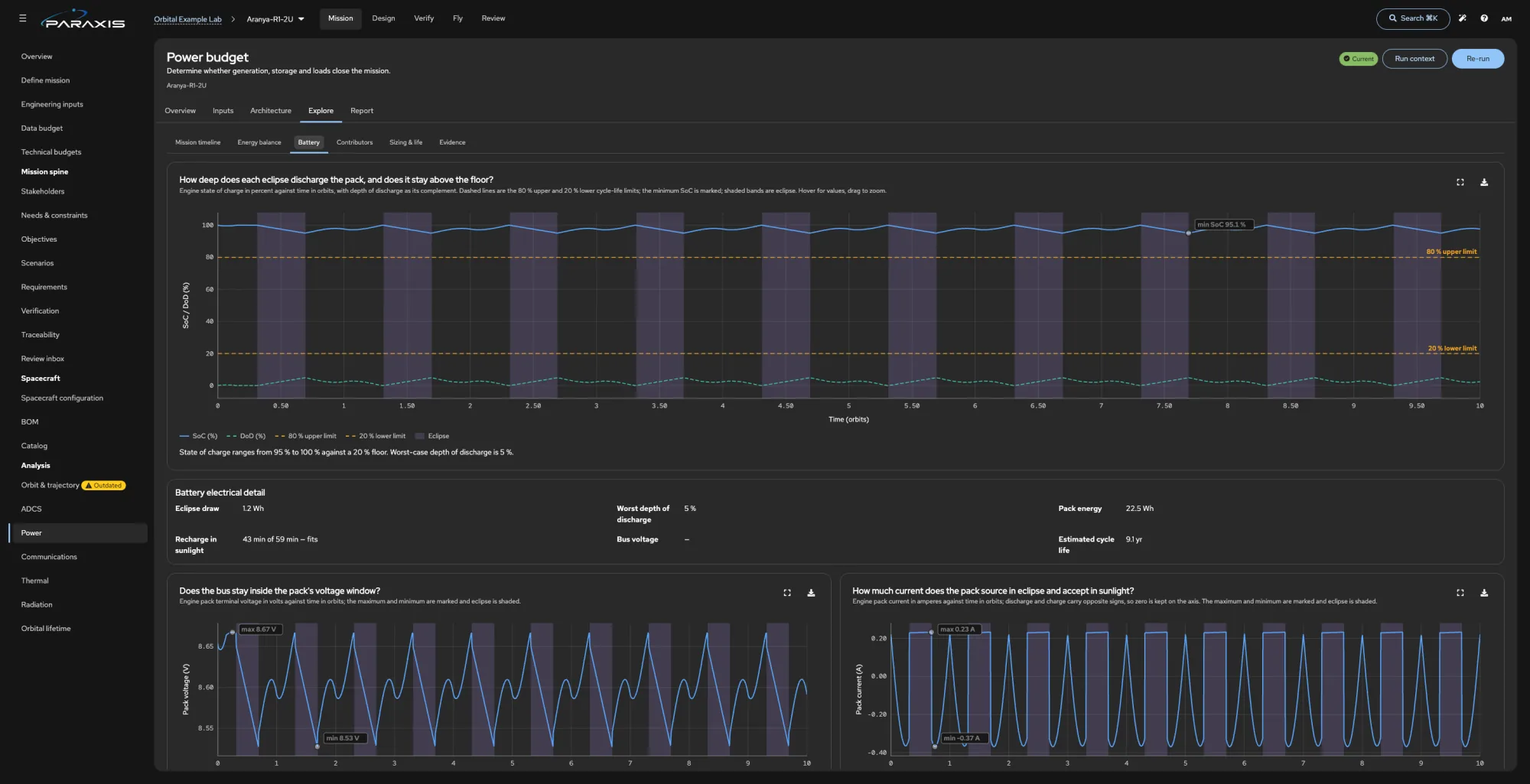
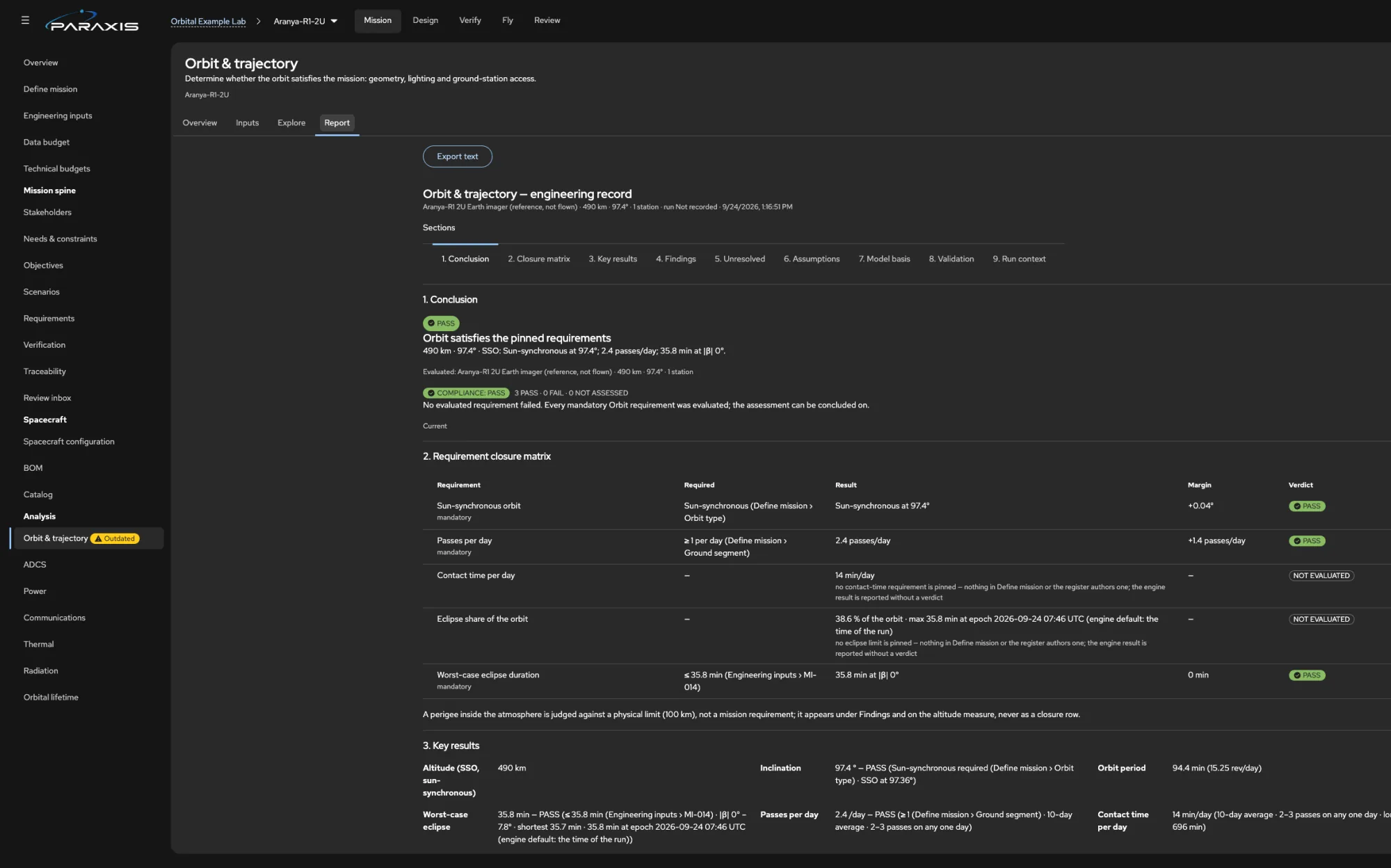
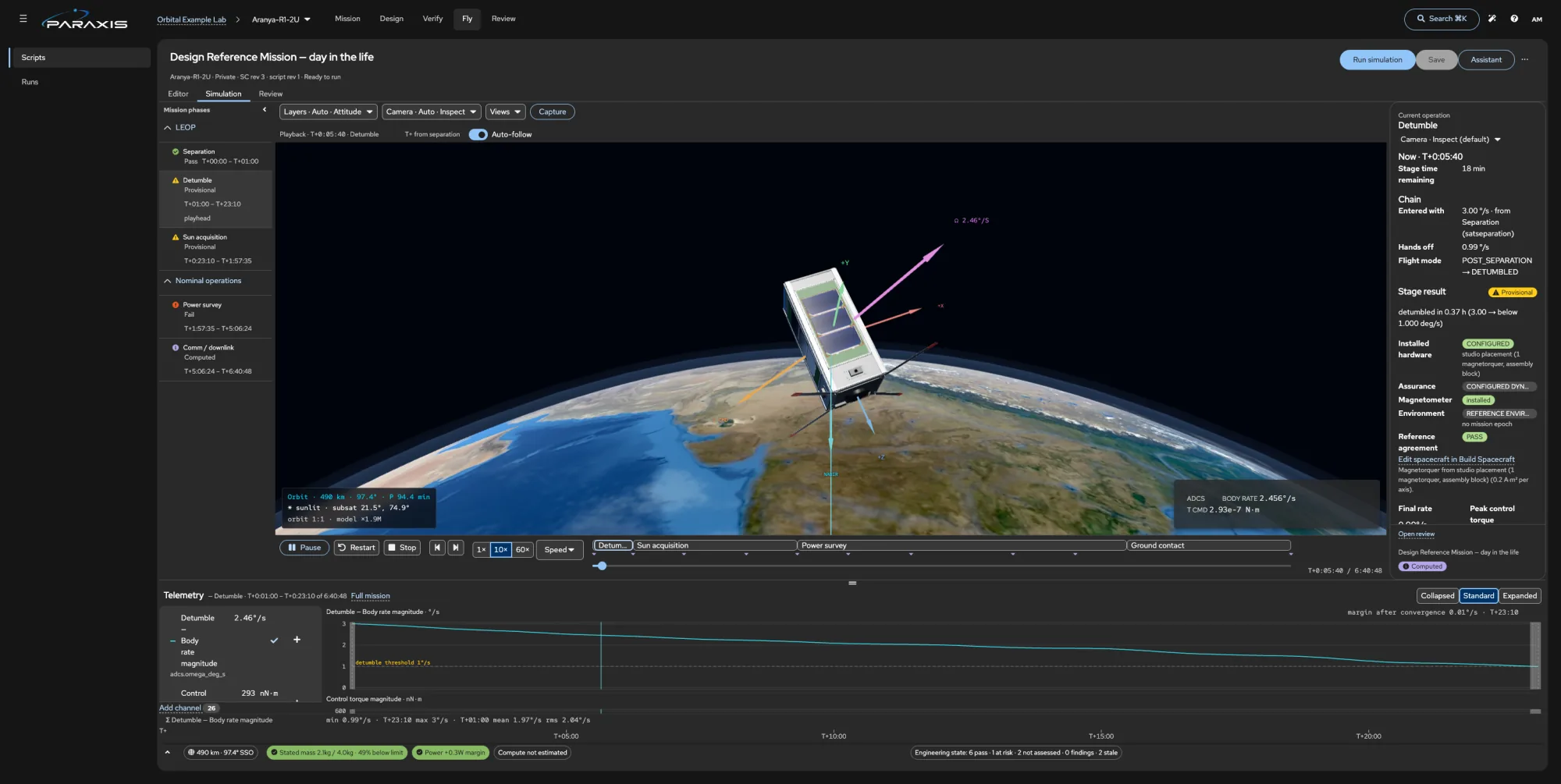
From orbit mechanics to power budgets, link margins to thermal analysis. Every subsystem. Automatic propagation. AI-assisted.
The Problem
Mission design is fragmented.
Disconnected tools
STK for orbits. MATLAB for power. Spreadsheets for thermal. Nothing talks to each other. Every change means updating six files by hand.
Manual iteration
Change the altitude by 25 km. Now recalculate eclipse fraction, link slant range, atmospheric drag, radiation dose, and ground contact windows. Manually.
Late-stage surprises
Margin violations found at PDR, not during concept design. A 200g mass overrun discovered after months of subsystem work. Rework that could have been caught on day one.
Platform
Every analysis your mission needs
22 integrated engineering domains. Change an orbit — every budget updates instantly.
Workflow
From concept to PDR
One platform. Every subsystem. Automatic propagation.
Define
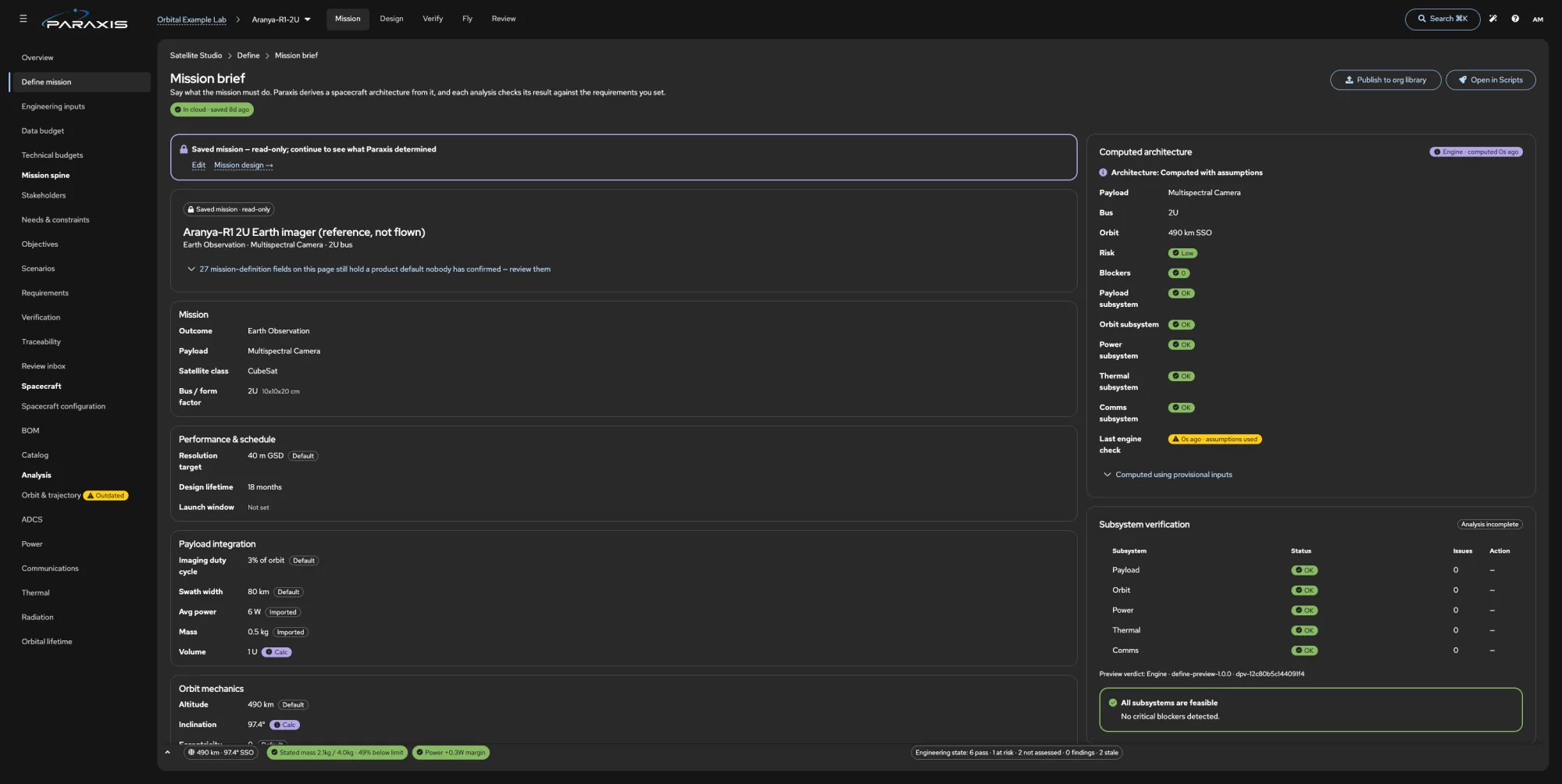
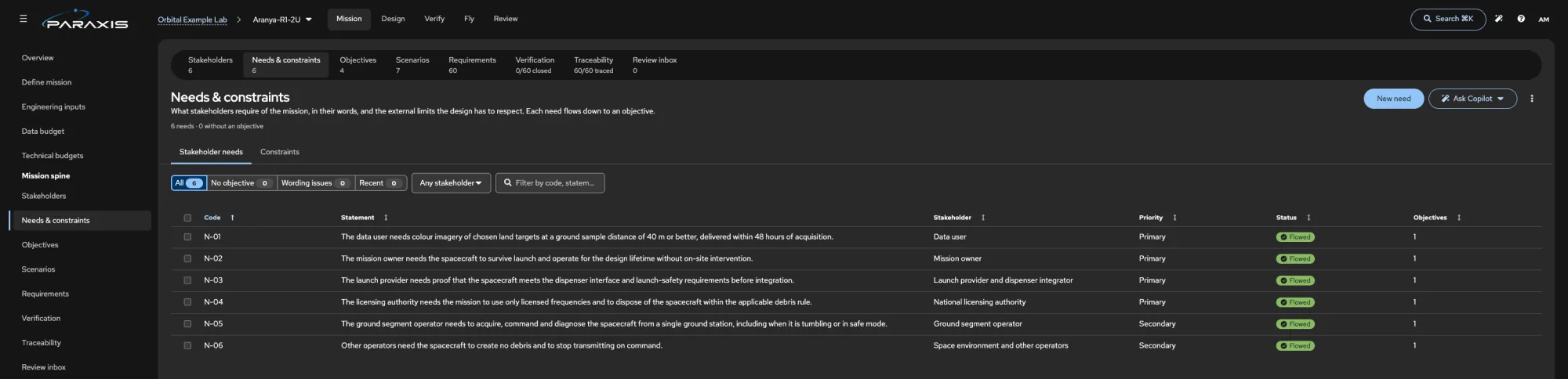
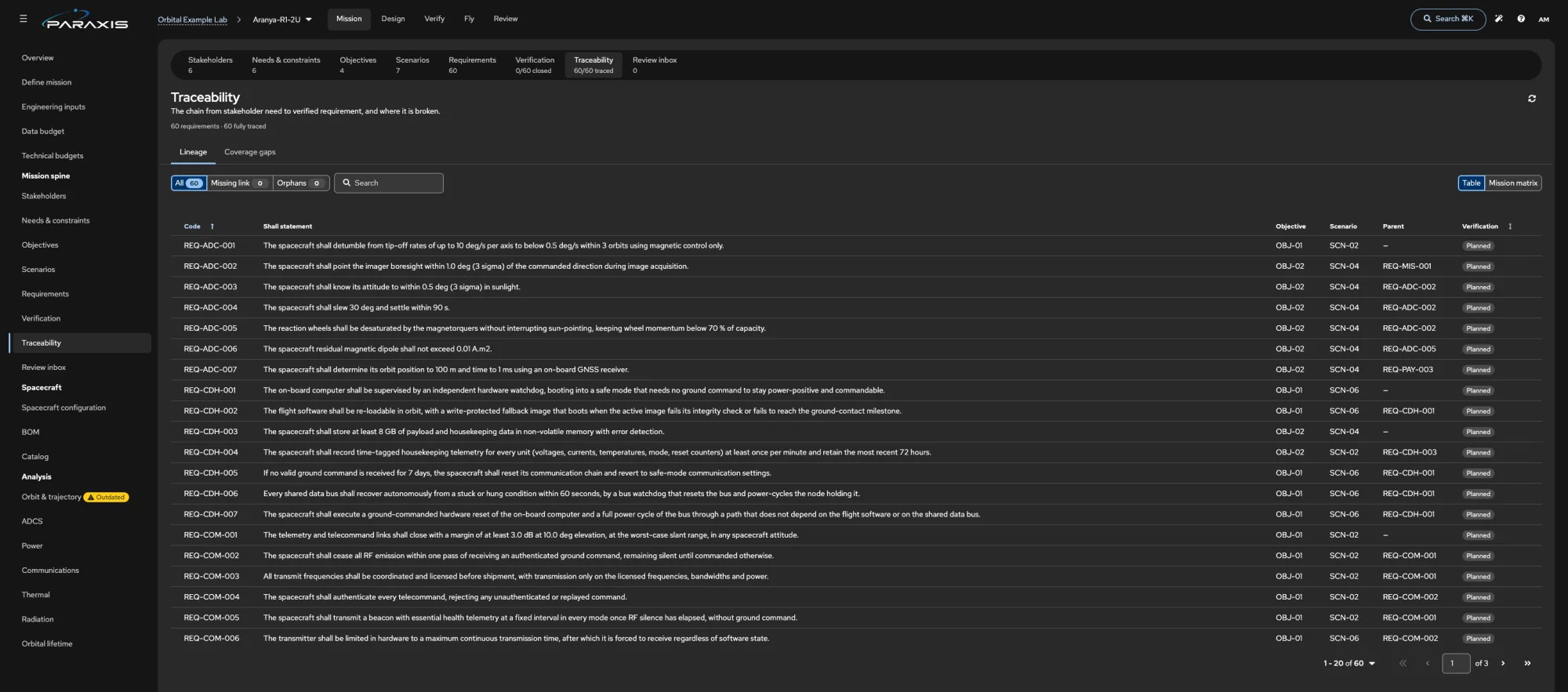
Set mission objectives, orbit parameters, payload requirements, and constraints. Start from a reference architecture or from scratch.
Configure
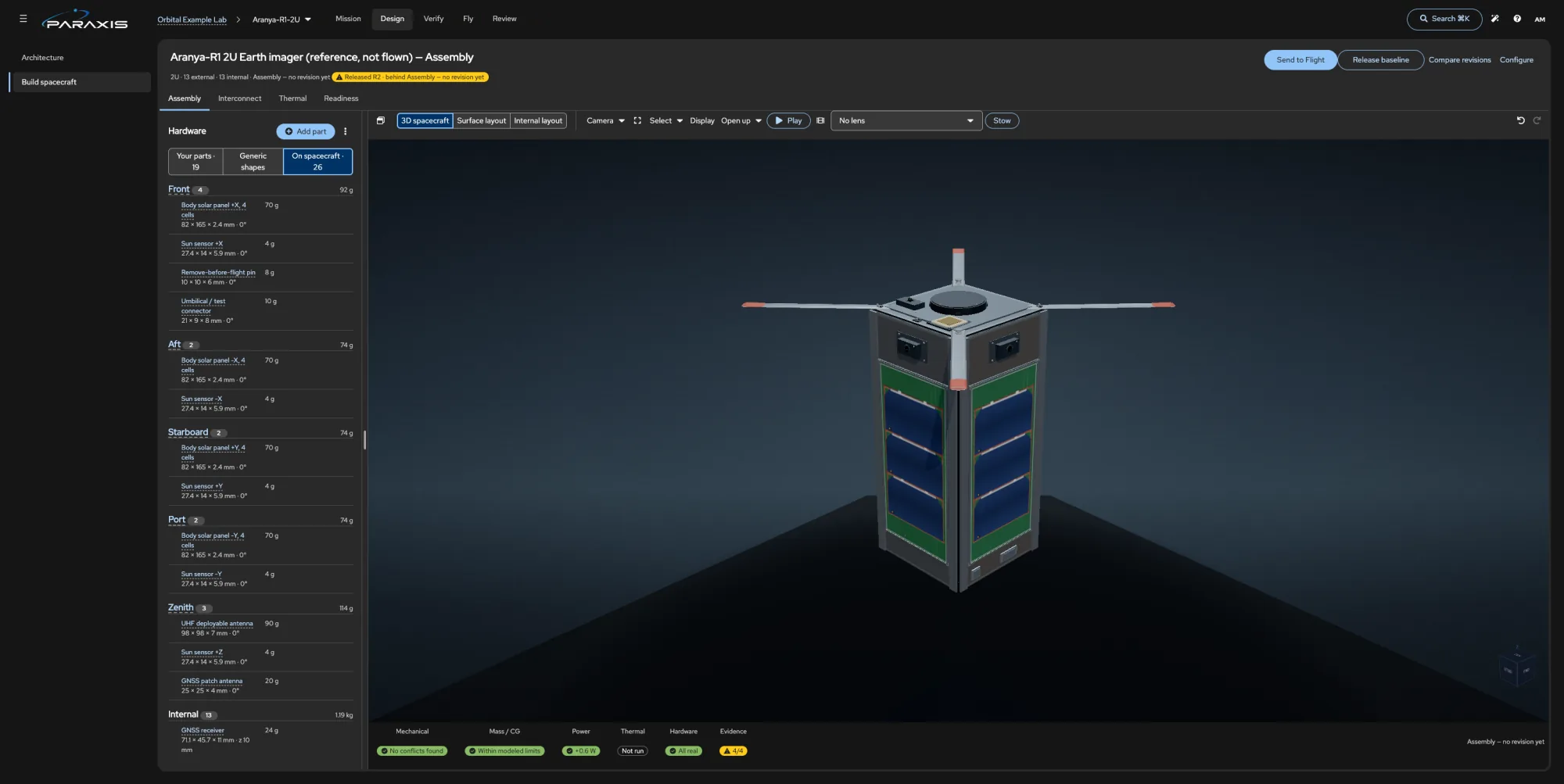
AI synthesizes a baseline design. Power, thermal, comms, ADCS — each subsystem sized to your requirements. Review and override any parameter.
Iterate
Run trade studies, sweep parameters, compare against reference missions. The AI copilot flags margin issues and suggests improvements.
Export
Generate a mission review package — PDF with all budgets, margin summaries, and configuration parameters. CSV and JSON for further analysis.
Engineering Credibility
Built on real physics
Industry-standard models. ECSS-compliant analysis. Validated against published reference missions.
Trust
Built on industry-standard models and references
FAQ
Common questions
Everything about designing missions with Paraxis.
Start designing your mission
From orbit mechanics to mission review. One platform, every subsystem, automatic propagation.