Mission design software for small satellites

Mission design
that proves itself.

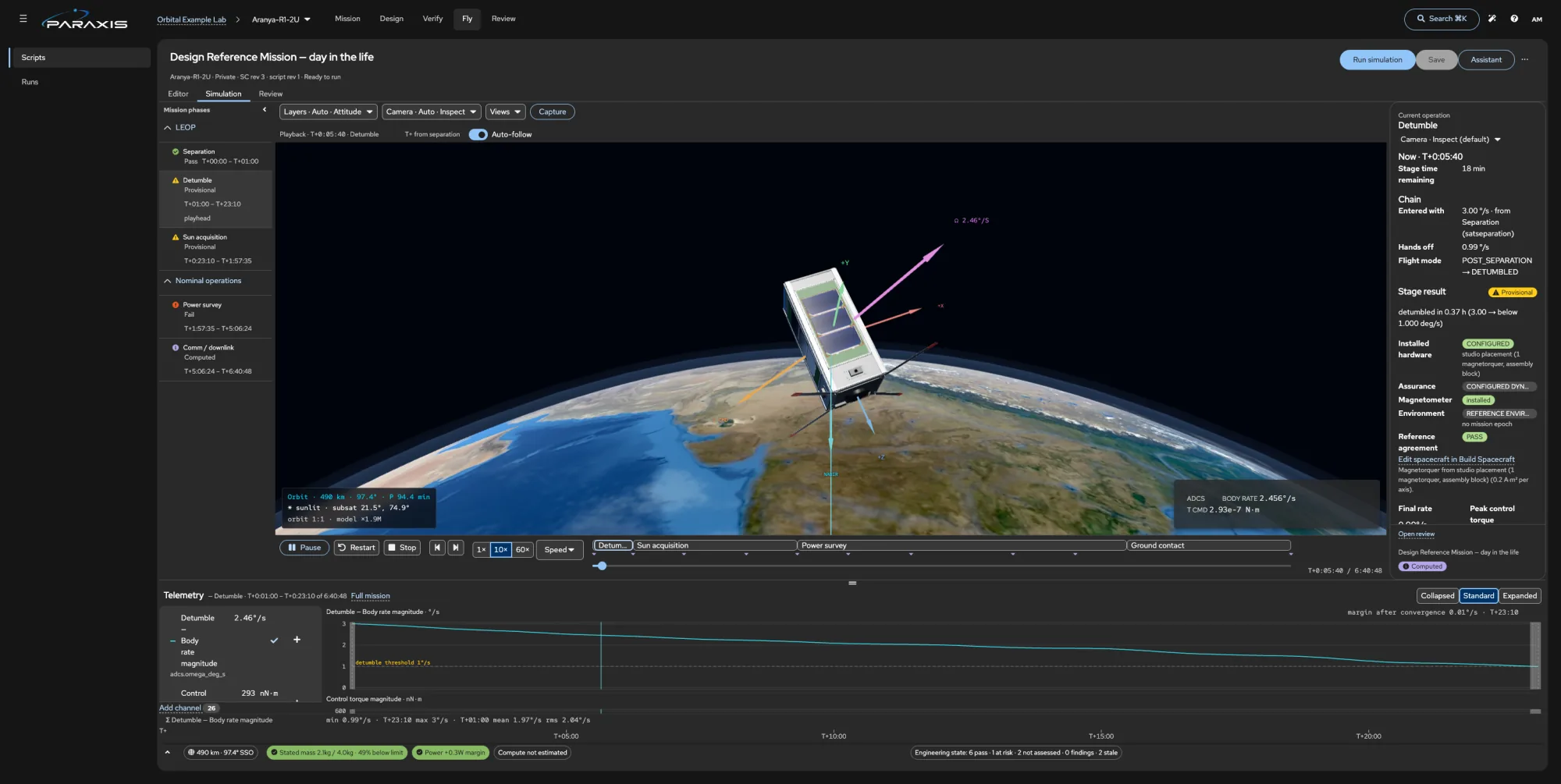
Define the mission, assemble the spacecraft from real parts, and fly it in simulation — every number traced to evidence.

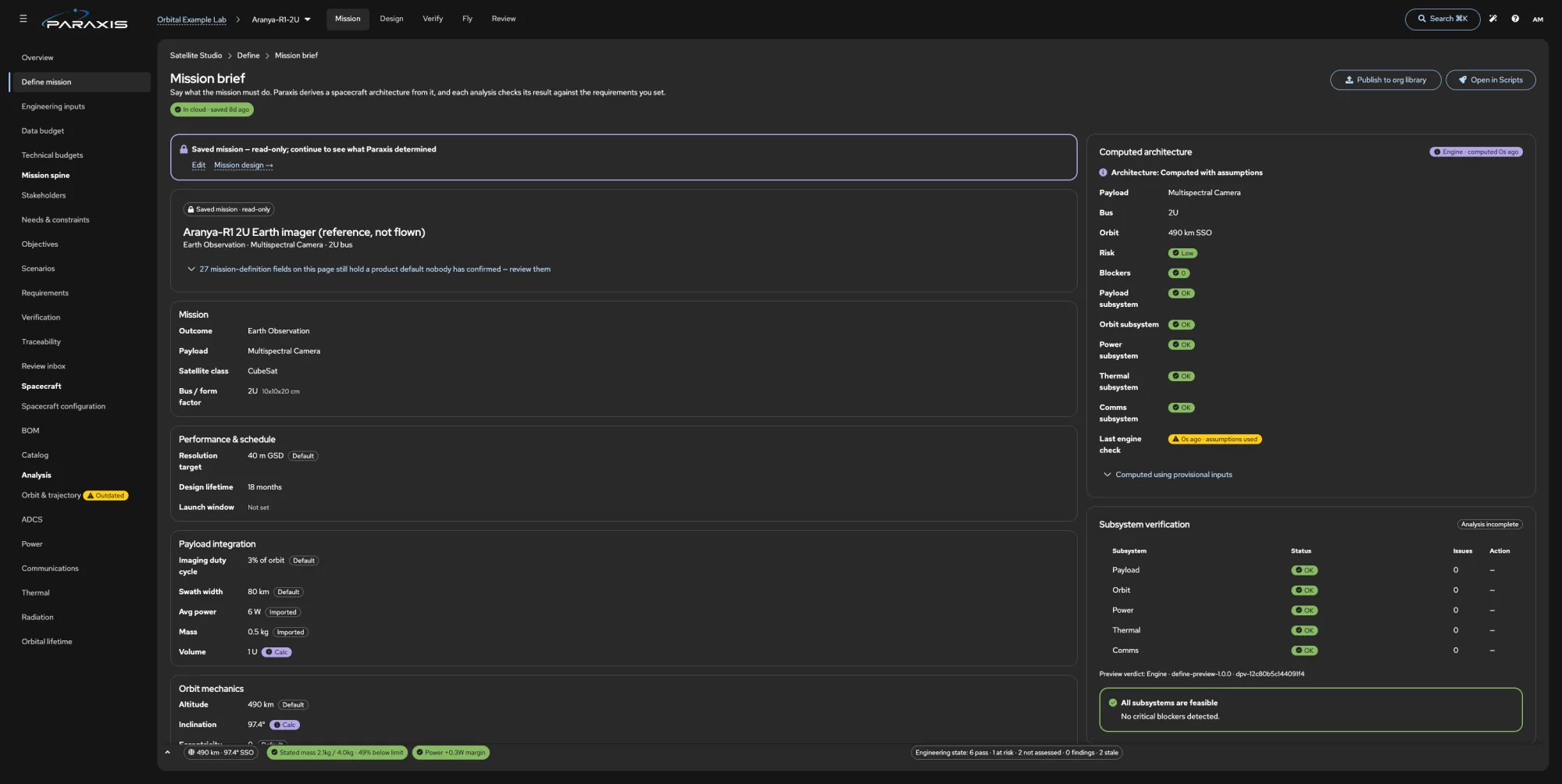
  1. 01Define the mission
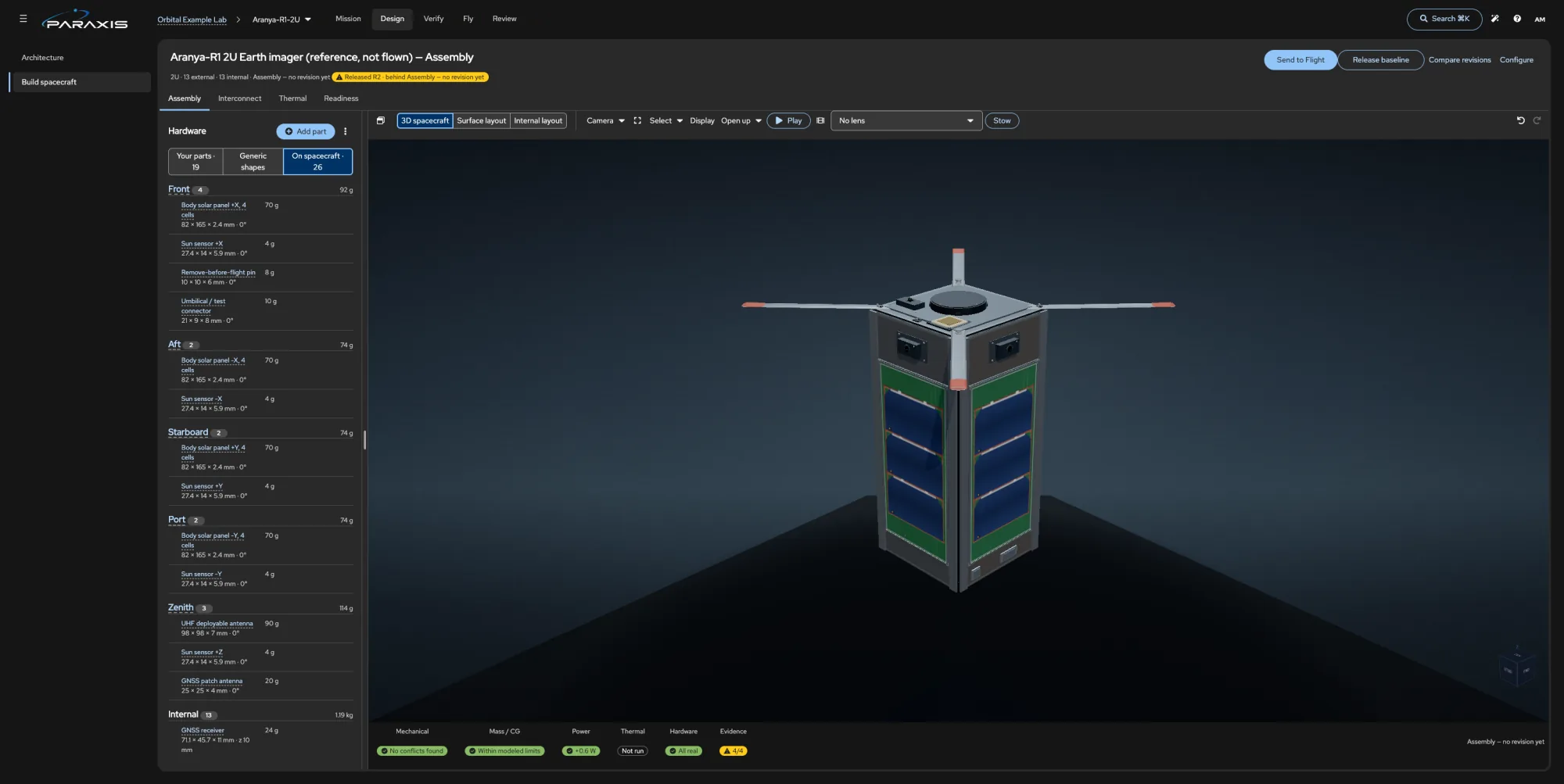
  2. 02Model & simulate
  3. 03Verify & package

The closure board

The verdict is the product.

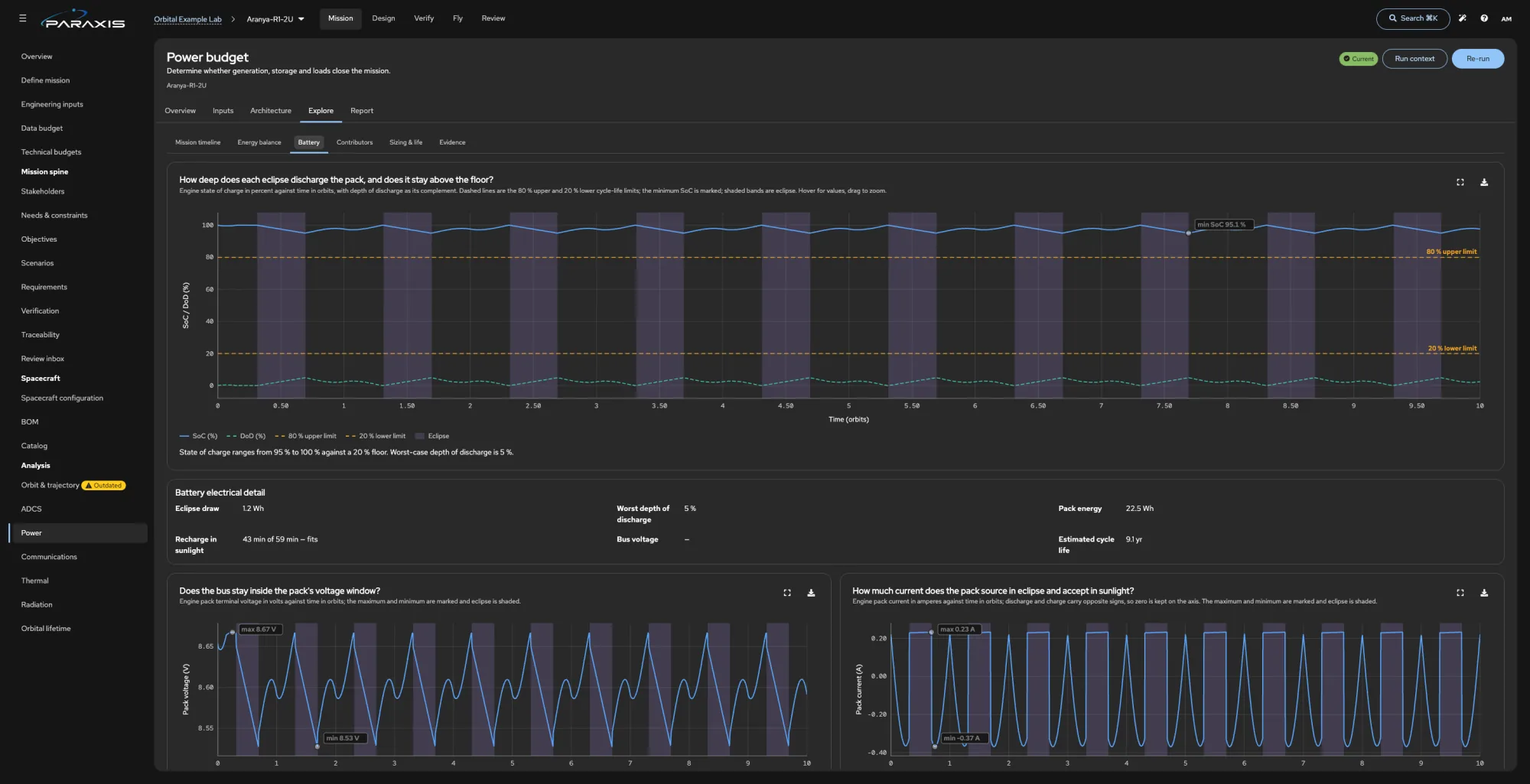
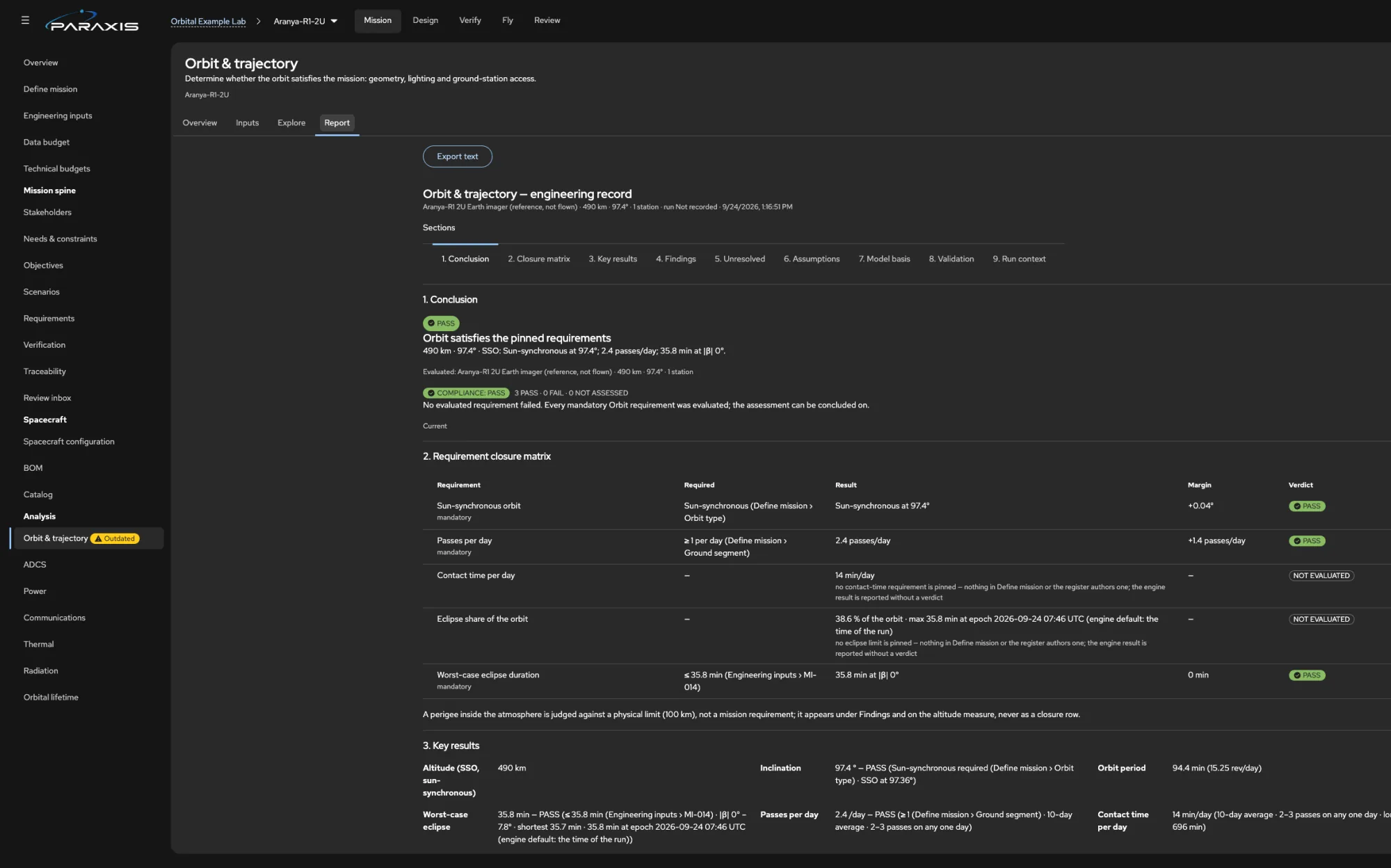
Every budget is computed by a versioned physics engine and rolled into one go/no-go. When a margin fails, Paraxis says so — plainly, with the number.

From a real run of a 12U study mission. The red rows are the point: a design that doesn't close should never look like one that does.

BudgetCurrentMarginStatusEngine
Mass11.7 kg of 22.0 kg+47%METMEL
Power (orbit-avg)10.6 W margin+6%METsatpower
Link (RF downlink)−15.6 dB marginNOT METsatlinkbudget
Pointing (APE)51.7 arcsec vs ≤ 288METsatadcs
Thermal10 to 35 °CMETsatthermal
Lifetime / deorbitExceeds FCC 5-yr disposal−113%NOT METsatlifetime

How it works

Three moves, one living model.

01

Define the mission

Orbit, payload, constraints, design life. The brief becomes a living model that every downstream number answers to — not a slide.

02

Model & simulate

Assemble the spacecraft from catalog parts and fly it: power, thermal, link, pointing, radiation, lifetime — one coupled simulation, recomputed when anything changes.

03

Verify & package

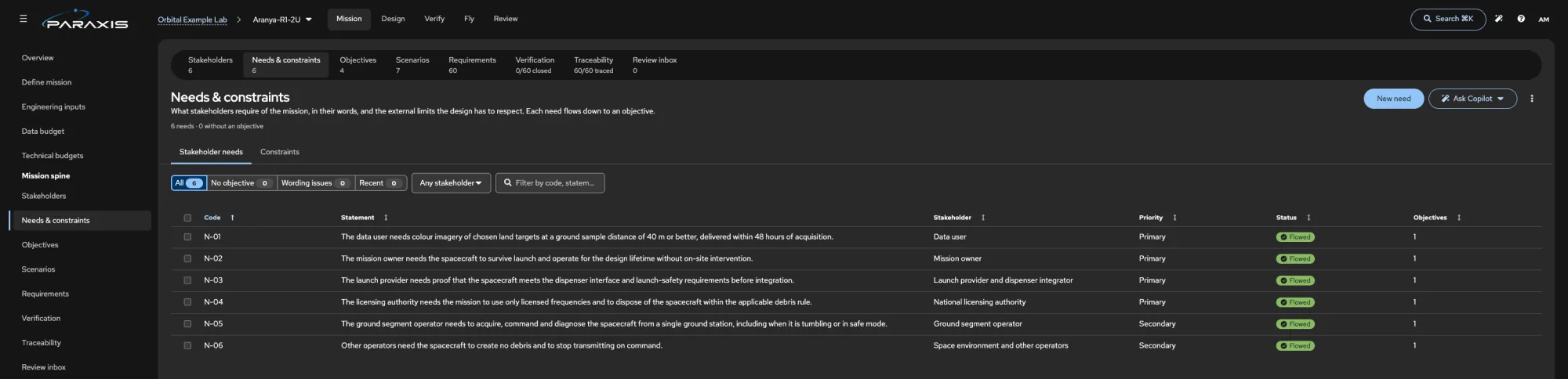
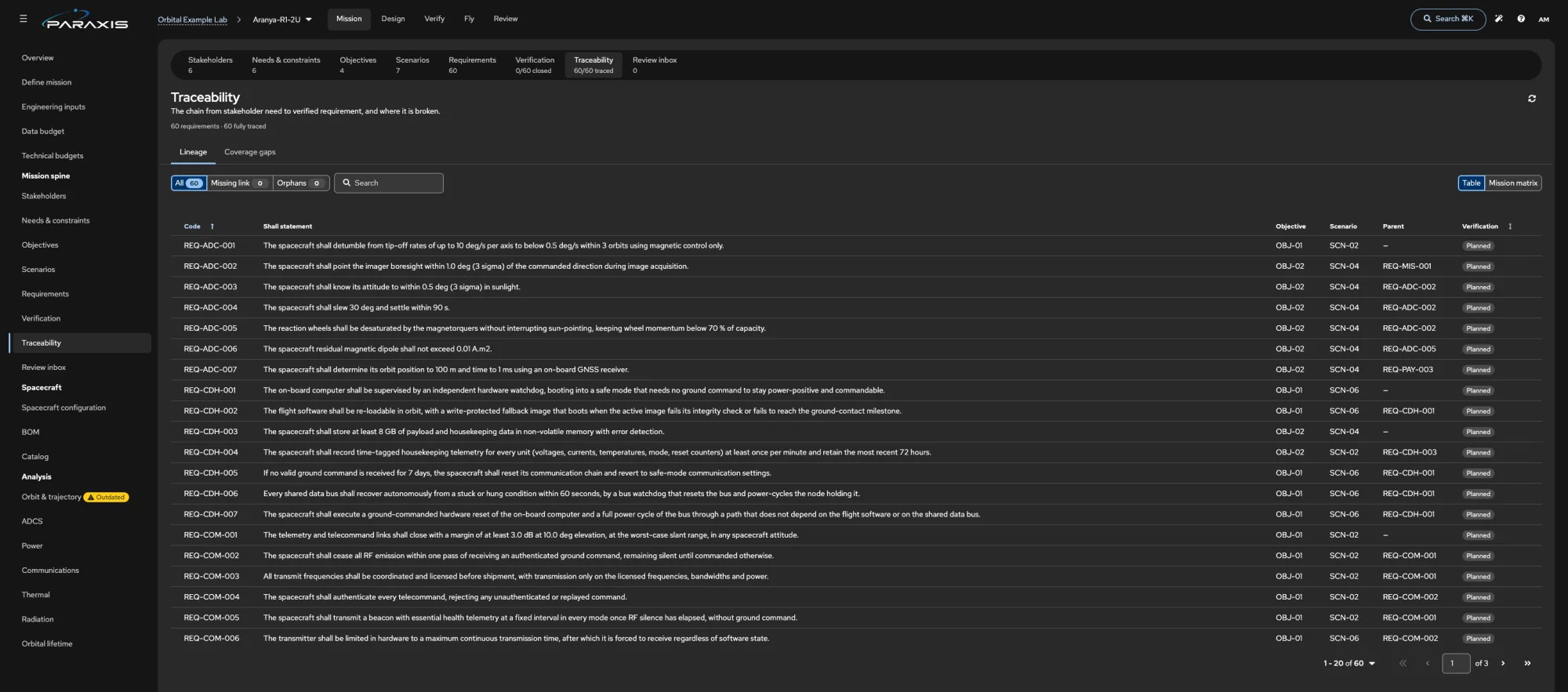
Trace every requirement to the evidence behind it, and export a review package a board can interrogate line by line.

The engines

Real physics, versioned and checked.

Domain engines run server-side behind one mission model — no spreadsheets drifting out of sync. Results are checked against analytical anchors and published flight budgets: SwissCube and HUMSAT-D link margins reproduce to within 0.2 dB.

Modeled results, not flight heritage — and labeled that way everywhere in the product.

orbitpowerthermallinkpointingradiationlifetimepropulsionstructuresconstellationgroundcost

Design a mission.
Prove it closes.